


UV related knowledge
Understanding ultraviolet (UV) radiation
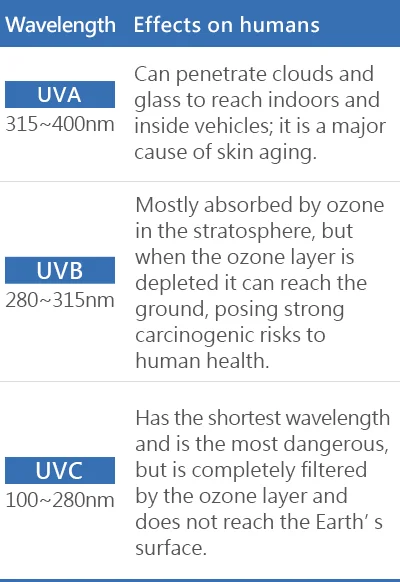
Ultraviolet (UV) radiation is an invisible type of light from the sun that reaches the Earth’s surface. The atmosphere normally helps shield us from harmful radiation, but human-made pollutants have damaged the ozone layer, allowing more UV to pass through. As a result, on clear, cloudless days, excessive sun exposure can still cause damage to the body.

The Ultraviolet Index (UVI) is a numerical scale that describes the strength of UV radiation. A UVI of 0 means there is essentially no UV exposure, and the higher the UVI value, the stronger the ultraviolet intensity.
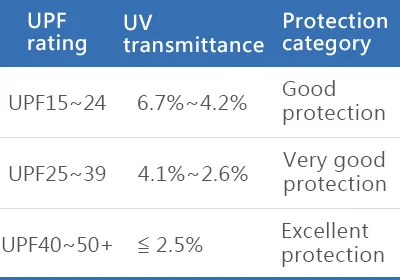
The Ultraviolet Protection Factor (UPF) is the rating system used for UV-protective clothing. The higher the UPF value, the better the sun protection the fabric provides.

The harmful effects of ultraviolet (UV) radiation
Prolonged exposure to sunlight stimulates the production and synthesis of melanin. This not only causes the skin to tan, but over time can lead to dark spots and freckles.
Ultraviolet radiation is a harmful form of light. When absorbed by the skin, it can damage DNA; once DNA is damaged, cells may die or transform into uncontrolled cancer cells—this is the initial stage of tumor formation.
UV radiation also harms the eyes. Protection should start as early as possible to prevent damage from gradually accumulating and worsening over time.
Conditions linked to UV exposure include wrinkles, sunburn, cataracts, skin cancer, vision impairment, and damage to the immune system.
How to protect yourself from UV exposure
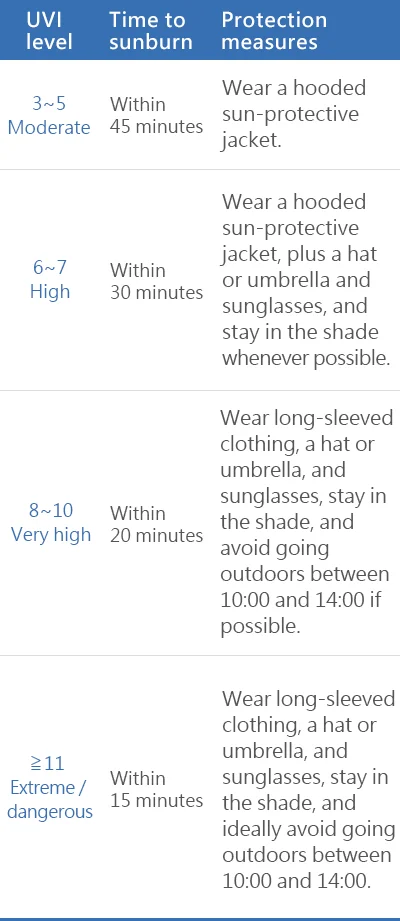
Pay attention to the Ultraviolet Index (UVI) forecast and try to avoid outdoor activities under strong sun between 10 a.m. and 2 p.m.
When going outdoors, wear a hat and sunglasses, use an umbrella, and choose long-sleeved clothing with a UPF of 30 or higher to block more than 96% of UV radiation.
UV levels are also very high in snowy areas, on beaches, and at high altitudes, so proper protection is especially important in these environments.
Choose sunglasses with UV400 protection, preferably with gray or brown lenses. Regular tinted lenses without full UV protection can still let ultraviolet light enter the eyes and cause damage.

What should you do if your skin gets sunburned??
Cold compresses can help relieve sunburn. Soak a towel in cold water, wring it out, and place it on the affected skin. Apply 3–4 times a day, about 30 minutes each time.
You can also wrap ice cubes in a soft cotton cloth and place it gently on the sunburned area to ease the pain.
If symptoms are severe or do not improve, please seek medical advice.
Do we really need sun protection all year round?
Taiwan has a subtropical climate with sunshine almost all year. UV rays can penetrate the atmosphere and even car windows, so it is recommended to protect yourself from the sun in every season.
How can I check the UV index?
The Central Weather Administration provides the current UV index and forecasts, updated promptly every day.
Related website: Environmental Protection Administration, Executive Yuanwww.epa.gov.tw
How can you identify UV-protective fabrics?
There are currently four main textile technologies used to create UV-protective fabrics:
- 1. Fabrics made from ceramic-based yarns that reflect UV rays. They offer strong sun protection and provide permanent UV resistance.
- 2. Fabrics treated with UV-absorbing agents during the dyeing and finishing process; however, the protection tends to diminish over time.
- 3. Fabrics laminated with a UV-blocking layer, commonly used in umbrellas and parasols.
- 4. Fabrics that use functional yarns combined with special knitting or weaving structures to achieve long-lasting, built-in UV protection.
Because UV protection cannot be judged by the naked eye, it is recommended to choose products with recognized international certification, so that the sun protection performance is guaranteed and safer for your health.
How should I wash UV-protective clothing?
Do not use detergents that contain bleach or optical brighteners. Wash lightweight fabrics on a gentle cycle, and place small accessories in a laundry bag. Avoid fabric softeners, as they can damage the fabric’s moisture-wicking & quick-drying performance.
Do you really have to wear dark colors for effective sun protection?
Traditionally, people believe that dark-colored clothing absorbs more UV rays and therefore offers better protection. However, with advances in UV-protective textile technology, sun protection no longer depends on how dark the fabric is, but on the fabric’s structure and its specialized UV-protective treatment.
The UV-protective fabrics used by UV100 are engineered through modified yarns and optimized weaving density to effectively block both UVA and UVB. Even in light-colored and lightweight fabrics, they still achieve the highest protection level of UPF 50+ (blocking more than 98% of UV radiation).
- Tested and certified by ARPANSA in Australia for UV protection.
- Uses non-coating technology, so the UV protection is built into the fabric, remains stable over time, and does not wash off.
- Suitable for prolonged outdoor activities and hot climates, combining cooling comfort with reliable sun protection.
Therefore, the key to UV protection is choosing garments with a UPF rating and recognized international certification—not limiting yourself to dark-colored clothing.